
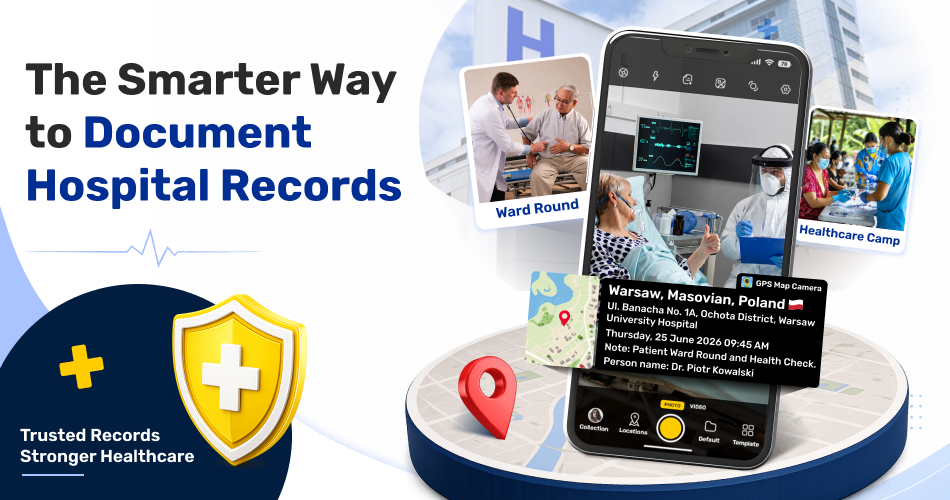
In hospitals, proper records matter as much as diagnosis. Doctors, nurses, and admin staff must keep accurate details of patient visits, procedures, ward rounds, emergencies, and field healthcare. Along with written notes, photos are also used to support medical files and inspections. GPS Map Camera helps by placing location and time on every photo, making hospital records more accurate and trustworthy.
1. Why Verified Records Matter
Hospitals work under strict rules, audits, and standards. Each activity — patient admission, treatment, inspection, or outreach — must be logged correctly. Plain photos miss the where and when, which creates gaps in records. GPS Map Camera fills these gaps by stamping date, time, and place directly on every image.
2. Help in Audits and Compliance
Hospitals go through frequent audits for safety, hygiene, and equipment checks. GPS-tagged photos act as solid visual proof that inspections were done on the right site and date. Audit teams use them to show compliance and maintain clean inspection schedules.
3. Strong Proof in Emergency Cases
In emergencies, photo evidence is often essential. Around 60–80% of urgent cases need some visual record. ICU admissions, accident cases, medico-legal matters, and disaster response often depend on photos. Mobile units also use them to confirm services. GPS Map Camera makes this proof stronger by showing the exact moment and place of action.
4. Use in Medical Camps and Field Visits
Doctors take part in camps, vaccination drives, and rural visits. GPS Map Camera confirms the camp spot, service date, and medical activity. Such records are useful for hospital files, government records, and healthcare program proof.
5. Better Transparency in Hospital Work
Hospitals deal with sensitive cases, so honesty is key. GPS-stamped images give clear visual proof for internal use, third-party checks, and institutional reports. This cuts down on misunderstandings and builds trust.
6. Fewer Disputes and Mistakes
Many disputes occur due to missing records or unclear dates. GPS Map Camera lowers these risks by adding verified details to each photo, helping hospitals keep proper timelines.
7. Easy to Fit in Existing Workflow
The app does not need any system change. Photos can be added to patient files, audits, or inspection reports — useful for small clinics and big hospitals alike.
Conclusion
GPS Map Camera helps hospitals achieve accuracy, transparency, and reliability in their records. By marking each photo with location and time, it supports inspections, emergencies, field services, and compliance — a simple tool that fits smoothly into daily hospital work.